
Hair Loss & Restoration
If you have tried everything, you have probably never been told why
Thinning, shedding, and a widening part almost always have a cause. Megan Luthy, a clinical trichologist in Idaho Falls and Rexburg, finds that cause with a comprehensive scalp analysis, then treats it with a science-based, multi-therapeutic plan instead of one more product off the shelf.
You are not imagining it
Losing your hair is hard, and the internet is not helping
You noticed more in the drain. The part got wider. You started parting it differently, wearing it differently, thinking about it constantly. Then you went looking for answers and found a wall of miracle oils and confident strangers selling you the one thing that finally works.
Here is the honest version. It is rarely about shampoo, and it is rarely one product. Hair loss has a root cause, hormones, stress, nutrition, genetics, or a scalp condition, and the only way to treat it well is to find out which one is driving yours. That is the work. Not rosemary oil. Not random stuff. The actual reason.
What we treat
The common causes behind thinning and shedding
Genetic thinning
Androgenetic alopecia
The most common pattern, often a widening part or thinning at the crown and temples. It responds best when it is caught early and treated on more than one front.
Stress and shock shedding
Telogen effluvium
Sudden, heavy shedding a few months after a trigger like illness, surgery, childbirth, crash dieting, or major stress. Often very treatable once the trigger is identified.
Patchy loss
Alopecia areata
Round patches where the immune system attacks the follicle. This is one where Megan works alongside your medical provider as part of the plan.
Itch, flaking, inflammation
Scalp disorders
A healthy scalp grows healthy hair. Dandruff, seborrheic dermatitis, folliculitis, and chronic irritation all get in the way and are part of what the analysis checks for.
How it works
From a single analysis to a tracked plan
Comprehensive scalp analysis
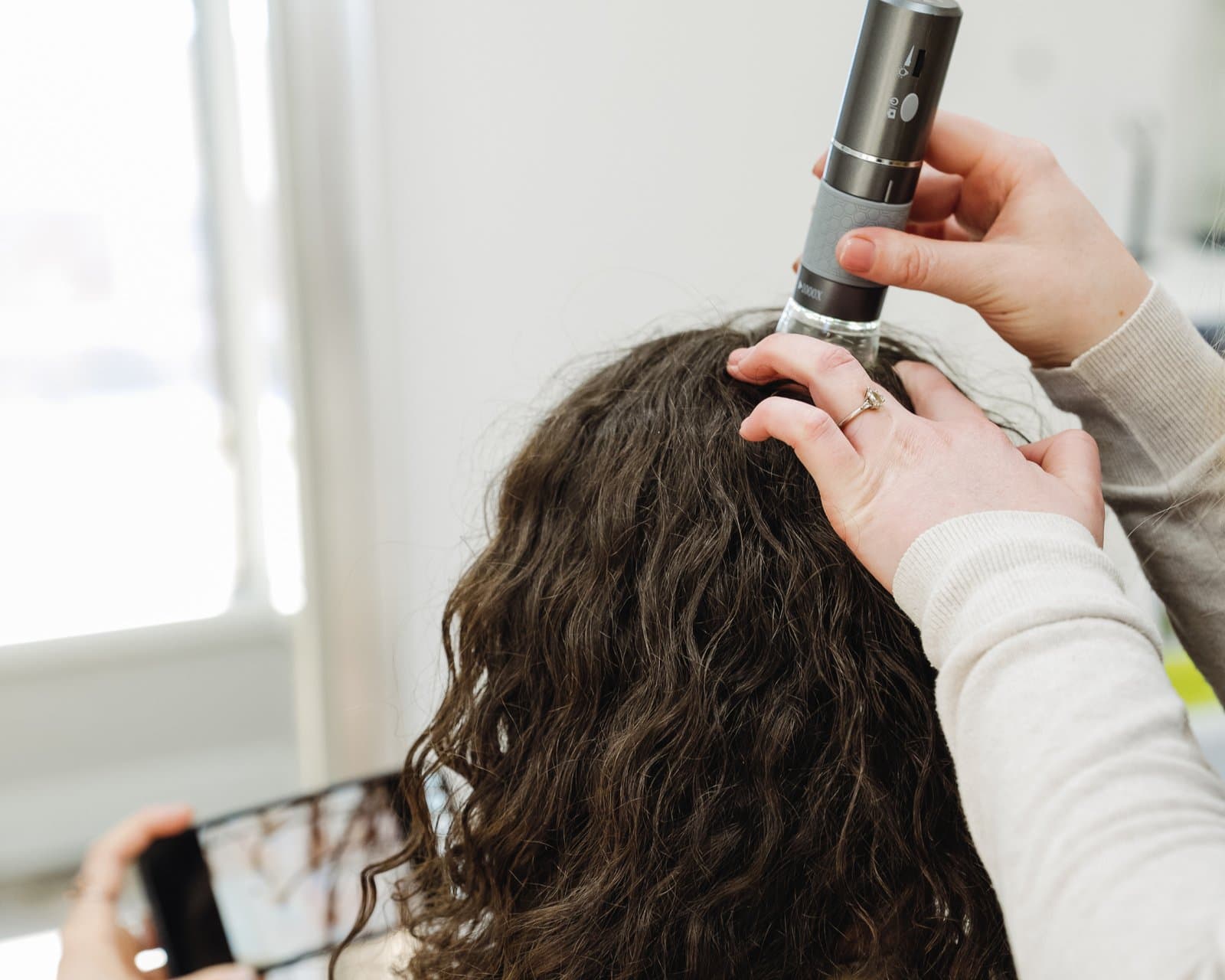
We look at your scalp under magnification and take a full health and lifestyle history. This is where we find the cause instead of guessing at it.
A plan built for your cause
Based on what we find, Megan combines the therapies that fit you: professional scalp treatments, low-level light therapy, growth serums, nutrition, and medical collaboration when it belongs in the plan.
Tracked progress over months
We photograph your progress at months one, three, six, nine, and twelve, and adjust as your hair and scalp respond. You are not left wondering whether it is working.
A note on timing, because it matters. Around month three, many people feel like nothing is working and want to quit. That is usually the moment the plan is starting to take hold under the surface. Megan will prepare you for it so you do not give up right before the turn.
What to expect
The real timeline of regrowth
Hair is slow, so we measure progress in months, not days. Here is the honest arc, including the part where it feels like nothing is happening.
Photo: Month 0 before/after photo
0Month 0
Baseline
Your starting point, documented with before photos and scope imaging.
Photo: Month 1 before/after photo
1Month 1
Early support
The scalp settles and your plan begins to take hold.
Photo: Month 3 before/after photo
3Month 3
First changes
Shedding often eases and the groundwork starts to show.
Photo: Month 6 before/after photo
6Month 6
Visible progress
Density and comfort improvements captured in your photos.
Tracked with photos at every visit
Questions
What people want to know
In many cases, yes, especially when the follicle is still alive and the cause is treatable, like stress shedding, nutrition, hormones, or a scalp condition. Some causes are about slowing and stabilizing loss rather than full regrowth. The scalp analysis is how we tell which situation you are in, so the plan is honest from day one.
Find your cause with a scalp analysis
One private visit to understand what is happening, and a clear, science-based plan for what to do about it.